
If you’re a homeowner in the Colorado Springs area, there’s one design challenge you’re likely acquainted with: that wonderful skylight bringing in golden daylight—and that same skylight also unleashing harsh glare, UV-fading issues, and sometimes uncomfortably bright interior surfaces.
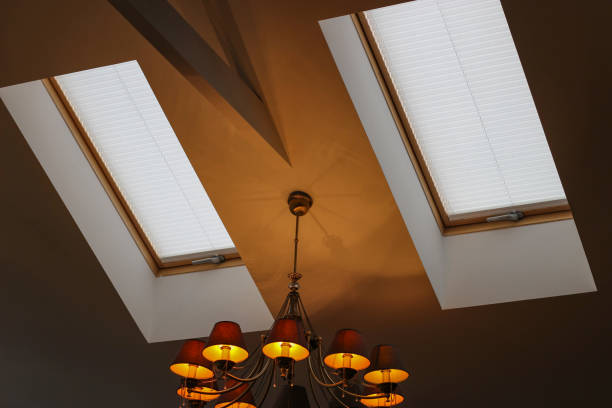
The good news: when fitted with the right skylight window shades, you can reduce glare significantly while retaining that airy natural light you love. Here’s how.
1. Why Natural Light Matters (Especially in Colorado Springs)
Natural light does so much more than just brighten a room. Studies show it enhances mood, improves productivity, and can help synchronise our body’s circadian rhythm.
In Colorado Springs, with its bright sunny days and broad high-ceiling homes, skylights are a popular architectural feature for bringing daylight deep into living spaces. But with that benefit comes risk: direct sunlight from above can cause glare, fading, and hot spots—the very things that skylight window shades are designed to address.
2. What Glare Means & Why It’s a Problem
Glare occurs when light enters the space too directly or at a high contrast, causing uncomfortable brightness or harsh reflections off walls, floors, furniture or screens. Skylights are especially prone because of their overhead angle.
When glare persists:
- Reading or screen work becomes difficult.
- Colours and interior finishes can look washed out or distorted.
- Furnishings and flooring suffer from accelerated UV-fading.
- The room can feel visually “noisy” or unsettled.
Properly designed skylight window shades enable you to keep the beautiful daylight while modulating it—softening its entry, filtering it, controlling its direction, and reducing its intensity.
3. How Skylight Shades Let Light In While Reducing Glare
Here are the key mechanisms by which skylight shades deliver that balanced outcome:
- a) Light-filtering fabrics
Rather than blocking all light (which would sacrifice the openness skylights give), light-filtering fabrics diffuse the incoming sun, scattering it gently across the room. This soft diffusion retains natural daylight but eliminates harsh direct rays and the resulting glare. - b) Strategic placement & angle control
Because skylights are angled, glare control often involves matching the shade’s orientation and fabric to the path of the sun. A well fitted shade will reduce the angle of direct incidence and eliminate that blinding midday or afternoon sun. - c) Insulating/cellular constructions
Some skylight shades use a honeycomb or cellular structure which traps air and adds insulation. While the primary role is energy savings, these constructions also help moderate light gradually rather than letting uncontrolled bright beams pour in. - d) UV protection & fade-control
The fabrics used often incorporate UV-blocking or UV-filtering elements. That means even though light is coming in, the harmful rays that cause fading of furniture or flooring are reduced. - e) Motorised or remote control options
Skylights often sit where manual operation is cumbersome. Motorised skylight shades allow automatic adjustments—closing during peak sun, opening in softer hours, all without manual effort. That means you can more precisely control daylight and glare throughout the day.
4. Why This Is Especially Relevant in Colorado Springs
- Bright skies and strong sun angles: With many sunny days and a higher altitude, direct sunlight can be more intense, making glare a serious design issue.
- High-ceiling homes & open living plans: Skylights often sit in large, open volumes—so light control must consider expanded surfaces and reflections.
- Design aesthetic: Many homeowners here want that bright airy feel—but without the trade-offs of harsh light or bleaching of furnishings.
- Energy efficiency matters: In a climate with sunny summers and cooler winters, skylight shades that help with thermal control also complement daylight control.
Thus, for a homeowner in Colorado Springs looking to maintain that luxury feel, skylight window shades are not just a window-treatment—they’re a light-management strategy.
5. Choosing the Right Skylight Shade Type & Fabric for Your Home
Selecting the correct shade requires considering your light-control needs, durability, ease of use, and installation context. Here are some guidelines:
Shade fabric options:
- Light-filtering semi-sheer – Best when you want to keep the space bright but reduce direct rays and harsh reflections.
- Room-darkening – Ideal if the skylight is above a media area, bedroom, or where you sometimes want very low light.
- Insulating/cellular – Excellent for rooms where thermal control matters, and glare is paired with heat gain or loss.
- Motorised automated – Recommended for hard-to-reach skylights or homeowners wanting smart home integration.
Questions to ask:
- What direction is the skylight facing and when does glare peak in the room?
- How frequently will the shade need to be adjusted?
- Do you prioritise maximum daylight or a specific mood of light (softer, less glare, warm ambience)?
- Is motorisation or remote control beneficial for your configuration?
By matching the project (skylight size, orientation, room use) with the right shade system, you ensure max daylight retention + minimal glare.
6. The Installation & Service Advantage
Since skylights are typically at high or angled positions, proper installation is critical for the shade to perform correctly. A local specialist—such as one offering in-home consultations and measurements (which the earlier feedback emphasised)—will:
- Take accurate angled measurements to fit the shade precisely.
- Specify the correct hardware for the skylight’s shape and slope.
- Suggest the ideal operating method (manual crank, pole, remote, or motorised).
- Recommend proper fabric selection based on room use, sun path, and décor.
Additionally, for regular maintenance—especially if the fabric is exposed to strong UV or outdoor elements—choosing a provider who offers cleaning or upkeep services helps prolong the performance of the shade.
7. Real-World Scenario: Living Room Skylight in Colorado Springs
Imagine your open-plan living room with vaulted ceiling and a large skylight facing south-west. Mid-afternoon, the low sun angle creates bright beams across the floor, strong mirror-glare from the TV, and the sofa arm begins to fade from repeated exposure.
Solution using skylight window shades:
- Install a light-filtering cellular shade with a soft neutral fabric; the honeycomb structure reduces glare and gently diffuses daylight.
- Choose motorised operation so, at 2 p.m. when the glare peaks, the shade automatically lowers, maintaining the daylight fill while eliminating harsh direct rays.
- Fabric includes UV-block treatment to protect furnishings and flooring from fading over time.
- The visual effect: A bright, inviting room with diffuse daylight, comfortable viewing on the screen, and no near-blinding reflections.
8. Benefits You’ll Notice Immediately
- Reduced glare — Easier on the eyes, better for screen-based work, reading, or relaxing.
- Minimal loss of natural light — The room remains bright and open; you don’t feel like you’ve “pulled the shades down.”
- Improved thermal comfort — With the right fabric, less heat in summer and less heat loss in winter.
- Better preservation of interior finishes — Furniture, flooring, artwork remain vibrant longer with UV-filtering fabrics.
- Increased value & aesthetic appeal — A well-executed skylight shade system elevates both comfort and style.
Final Thoughts
Skylights are a wonderful architectural feature, but without control, they can bring unintended glare, heat, and fading. Installing high-quality skylight window shades tailored for the Colorado Springs home means you won’t have to compromise between bright daylight and comfort.
By selecting the right shade type, fabric, and control mechanism—and ensuring expert installation—you’ll gain the best of both worlds: uninterrupted natural light and a glare-free space where you can truly live beautifully and comfortably.